Vedic Wisdom
The 27 Nakshatras in Human Physiology
The 27 Nakshatras in Human Physiology
Understanding the 27 Nakshatras and Their Correspondence in the Human Body
Think of the 27 Nakshatras (lunar constellations in Vedic astrology) as a network of specialized control centers in the brain — almost like a set of switches that manage how we stay alert, fall asleep, and dream. Each of these 27 groups helps regulate our body's automatic responses, like reflexes, breathing, heartbeat, and even how we experience and process pain. Interestingly, modern science shows there are also 27 corresponding groups of brain cells (neurons) that closely match the Nakshatras — not just in number, but also in their basic structure and the roles they play. This suggests a fascinating overlap between ancient astrological wisdom and modern neuroscience.
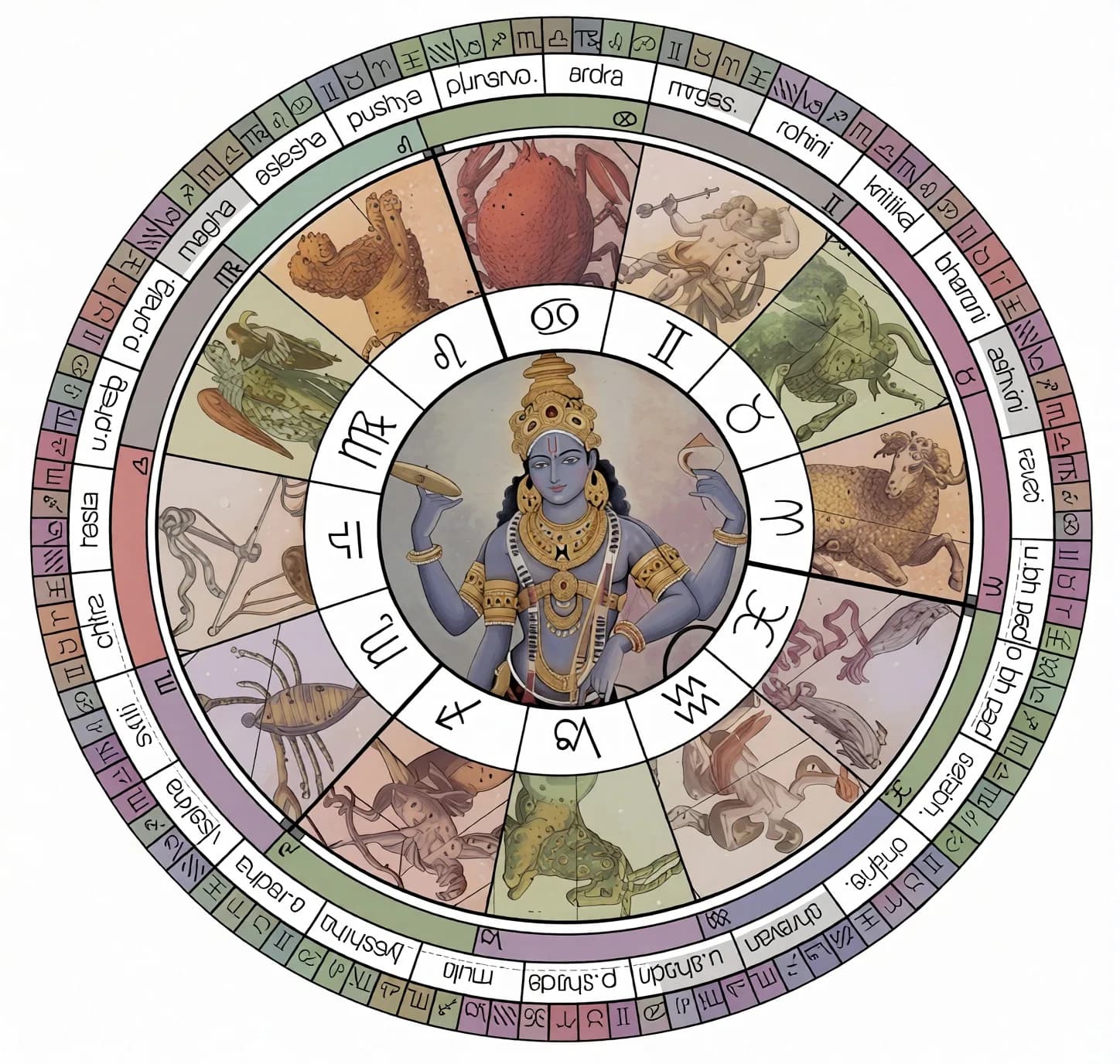
When a baby is born, everything changes instantly. Inside the womb, the baby didn't need to worry about breathing on its own, eating, or keeping its body warm — the mother's body took care of all of that. But the moment of birth flips a switch: suddenly, the newborn has to independently manage all these basic survival functions. This massive shift is guided largely by a part of the brain called the hypothalamus, which in Vedic astrology is symbolically linked to the Moon. The hypothalamus works together with brainstem centers (linked to the Nakshatras) to help the baby adapt to this brand-new environment outside the womb.
Before birth, though, the baby isn't operating on its own internal clock. Instead, its bodily rhythms — such as sleep patterns or internal cycles — are borrowed from the mother. The baby's nervous system develops in sync with her rhythms, almost like following her lead, while also slowly building its own independent rhythm in the background.
The exact moment a baby takes its first breath is significant. According to Jyotish (Vedic astrology), that specific moment captures a unique snapshot: a particular state of the Moon (representing hypothalamic activity) combined with a particular alignment of the Nakshatras (representing brainstem activity). This precise combination is believed to set the tone for the person's entire life journey — marking the beginning of their individual biological and astrological rhythm. From that point forward, life continues in structured cycles: the daily rhythm of day turning into night, the monthly rhythm of lunar phases, and many other natural patterns that shape our existence over time.
← Nakshatras