Vedic Wisdom
The Twelve Houses and Their Indications
The Twelve Houses and Their Indications
Summary: Covers the primary indications of each of the Twelve Houses in Vedic Astrology, together with explanatory notes and House Classifications.
This section is essential reading for students of Jyotish, as it outlines the principal areas of life governed by each of the twelve houses.
Jyotish divides the 360 degrees of the sky into twelve equal sections, each measuring 30 degrees. These divisions create the twelve houses used in Vedic Astrology. Jyotish always employs the Sidereal Zodiac.
Each house governs specific areas of life. Further details regarding the primary significations of the houses can be found in the article The Twelve Houses. Most chart interpretations in Jyotish are based upon a house-by-house examination.
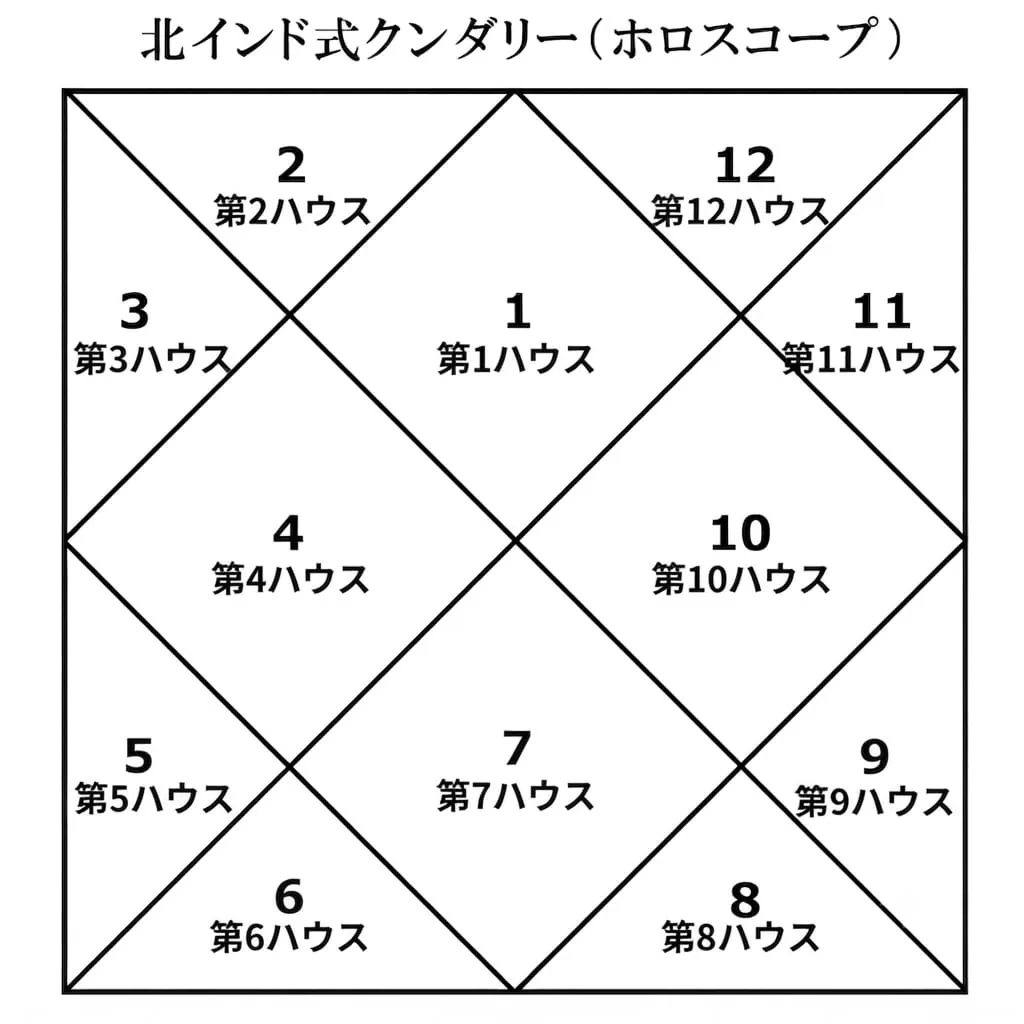
Most chart interpretations are conducted on a house-by-house basis, making a sound understanding of the houses and their indications absolutely essential.
Traditional Jyotish texts often provide extensive lists of matters associated with each house. However, in this article, I have attempted to remain concise and focus on the most important indications.
First House – ‘House of Body’
House Indications:
Birth and early childhood
Health, physical body, and vitality
Personality and temperament
Self-confidence and self-esteem
Prosperity and fame
Dharma – actions and activities that promote spiritual evolution
The 1st house governs several key areas of life, and a strong [1] first house tends to improve the overall quality of the horoscope.
It represents the self and all matters connected with our identity. The ruler of the 1st house plays a major role in shaping our personality, behaviour, and natural tendencies.
House Classification: Kendra / Dharma (Angular House / Action)
House Indicator [2]: Sun
Second House – ‘House of Wealth’
House Indications:
Accumulated wealth and finances
Speech and verbal communication
Family life
The 2nd house is the principal indicator of the wealth and financial resources we accumulate throughout life.
It is also closely associated with speech and verbal expression, making it important in matters relating to education and communication.
House Classification: Artha (Wealth)
House Indicator: Jupiter
Third House – ‘House of Brothers, Sisters and Desires’
House Indications:
Brothers and sisters
Desires and ambitions
Courage
Personal effort and initiative
Communication
A favourable 3rd house brings happiness through brothers and sisters. Siblings may be supportive and beneficial, and relationships with them are often harmonious. Some astrologers restrict the indications of the 3rd house specifically to younger siblings.
The 3rd is an Upachaya, or "growing" house, where malefic planets [4] generally perform well unless debilitated or otherwise weakened.
House Classification: Upachaya / Kama (Growing House / Desire)
House Indicator: Mars
Fourth House – ‘House of Happiness and Comforts’
House Indications:
Happiness and comforts
The affairs, well-being, and relationship with our mother
Fixed assets such as property, land, and buildings
Friends and relatives
The 4th house governs the home environment and our mother. The condition of the Moon also provides important information regarding the mother's well-being.
This house reflects our overall level of happiness, contentment, and satisfaction in life, whether physical, emotional, spiritual, or financial.
House Classification: Kendra / Moksha (Angular / Liberation)
House Indicator: Moon
Fifth House – ‘House of Children’
House Indications:
Children, intelligence, education, and the mind
Spiritual practices and religious knowledge
Past-life credit (positive returning karmas)
Investment and speculation
The 5th house rules children and provides information regarding offspring, their number, and the happiness they bring into our lives.
It also governs intelligence, common sense, learning ability, and education.
A strong 5th house is frequently found in the charts of virtuous individuals who have made significant spiritual or personal progress.
The 5th is considered a highly auspicious house, and planets occupying it generally benefit from the placement.
House Classification: Trikona / Dharma (Trinal / Action)
House Indicator: Jupiter
Sixth House – ‘House of Enemies’
House Indications:
Enemies, competitors, jealous individuals, work subordinates, and obstacles
Illness and disease
Worries and anxieties
In this context, "enemies" can include competitors or people who may rise to a higher status than us within an organisation.
A powerful 6th house often enables a person to excel and reach the top of their chosen profession.
The 6th is another Upachaya or growing house, meaning that the problems it indicates can improve with time. For example, a health issue shown by the 6th house may be present during childhood but disappear later in life.
Malefic planets and their natural significations generally function reasonably well in the 6th house.
However, the houses ruled by planets occupying the 6th are often disturbed to some extent.
House Classification: Dusthana / Upachaya / Artha (Negative / Growing / Wealth)
House Indicator: Mars
Seventh House – ‘House of Marriage and Partnerships’
House Indications:
Marriage and married life
Spouse or partner
Sexual passions
Partnerships of all kinds, including business partnerships
The 7th house reveals the quality of married life and the well-being of one's partner.
Additional insights regarding marriage can be obtained by treating the Moon's sign as the Ascendant and examining the planets located in the 7th house from the Moon.
A strong Navamsa chart [5] is highly beneficial for relationships and marriage.
The 7th house also governs certain aspects of travel.
House Classification: Kendra / Kama (Angular / Desire)
House Indicator: Venus
Eighth House – ‘House of Transformation’
House Indications:
Life, longevity, and death
Wills, inheritances, and legacies
Intuition, occult studies, and hidden knowledge
Secret and esoteric subjects
The 8th house is often referred to as the "House of Death" because it governs the nature and circumstances surrounding death.
However, a strong 8th house, particularly when supported by a well-placed Saturn, can indicate a long, active, and energetic life.
The 8th is also a Moksha house and often stimulates interest in personal transformation and spiritual growth.
According to some astrologers, it additionally governs chronic illnesses, long-term mental and physical conditions, and sexually transmitted diseases.
The 8th generally weakens planets occupying it (although exceptions exist), along with the houses ruled by those planets.
House Classification: Dusthana / Moksha (Negative / Liberation)
House Indicator: Saturn
Ninth House – ‘House of Fortune’
House Indications:
Luck, fortune, and prosperity
Religion, faith, worship, spiritual teachers, law, and higher knowledge
Certain aspects of the relationship with one's father
Pilgrimages and long-distance travel
The 9th house is of equal importance to the 1st house.
It primarily signifies luck, fortune, and blessings in life.
The 9th is generally regarded as the most auspicious house in the horoscope. Planets placed here tend to perform exceptionally well, and the ruler of the 9th carries a highly positive energy wherever it is located.
Some astrologers associate past-life credit more strongly with the 9th house than with the 5th.
A strong 9th house can bestow tremendous good fortune and a sense of divine grace.
A person's relationship with their spiritual teacher is seen through the 9th house. Traditionally in India, the father often fulfilled this role during childhood before a spiritual guru was encountered later in life. Consequently, some aspects of the father-child relationship are also examined through the 9th house.
House Classification: Trikona / Dharma (Trinal / Action)
House Indicator: Jupiter
Tenth House – ‘House of Status and Power’
House Indications:
Career, status, and reputation
Fame and professional achievement
Authority figures, government officials, and institutions
The status, authority, and influence of the father
The 10th house indicates the degree of success, recognition, and professional standing we may achieve in our chosen career.
It is an Upachaya or growing house, where malefic planets can perform well, provided they are not debilitated or adversely affected.
Many important factors relating to a person's father are also assessed from the 10th house.
House Classification: Kendra / Upachaya / Artha (Angular / Growing / Wealth)
House Indicator: Mercury
Eleventh House – ‘House of Gains, Profits and Desires’
House Indications:
Gains, profits, and income
Desires, wishes, ambitions, and opportunities
The 11th house differs from the 2nd in that it governs gains and profits obtained by any means. Therefore, even if the 2nd house is weak, substantial income may still be generated, although this does not necessarily result in accumulated wealth.
The 11th house governs the fulfilment of major desires and ambitions. A strong 11th brings opportunities that enable a person to realise their goals.
Like other Upachaya houses, malefic planets can eventually produce favourable results here.
House Classification: Upachaya / Kama (Growing / Desire)
House Indicator: Jupiter
Twelfth House – ‘House of Loss and Expenditure’
House Indications:
Expenditure, financial loss, and waste
Misfortune
Salvation, liberation, and enlightenment
Journeys to distant lands
The 12th house governs all forms of loss and expenditure.
A strong 12th house helps preserve and protect accumulated wealth.
It also indicates progress toward higher states of consciousness, spiritual development, and eventual enlightenment.
Planets placed here are generally weakened (although there are exceptions), and the houses they rule may also be adversely affected.
House Classification: Dusthana / Moksha (Negative / Liberation)
House Indicator: Saturn
Parts of the Body Associated with Each House
Each house corresponds to a particular part of the body. When a house is significantly weakened, it may indicate potential health issues affecting the related area of the physiology.
| House | Part of Body |
|---|---|
| 1 | Head |
| 2 | Eyes, face, mouth, upper throat |
| 3 | Arms, shoulders, lower throat |
| 4 | Chest, heart |
| 5 | Stomach |
| 6 | Region of the navel |
| 7 | Body below the waist |
| 8 | Reproductive organs, anus |
| 9 | Hips, thighs |
| 10 | Knees |
| 11 | Calves |
| 12 | Feet |
House Classification
Houses 5 and 9 (Trikona) are regarded as exceptionally auspicious. Planets placed in these houses become strengthened, and the houses they rule also benefit from their placement in the 5th or 9th.
In addition, the rulers of the 5th and 9th houses—even if naturally malefic planets such as Saturn—become functional benefics and carry a positive influence wherever they are placed.
Houses 6, 8, and 12 (Dusthana) are considered challenging houses. Planets occupying them tend to become weakened, and the houses ruled by those planets may also suffer.
The rulers of the 6th, 8th, and 12th houses often create difficulties somewhere in the chart, even if they are naturally benefic planets such as Jupiter. This generally applies unless the planet also rules one of the auspicious houses, namely the 5th or 9th.
Houses 3, 6, 10, and 11 form the special category known as Upachaya or "growing" houses. Malefic planets tend to perform well in these houses and eventually produce beneficial results. Difficulties indicated by these houses often diminish with time.
Houses 1, 4, 7, and 10 are known as Kendras or angular houses. Planets placed within them are strengthened.
The houses are also grouped into repeating cycles of four:
Dharma (Duty and evolutionary action)
Artha (Wealth)
Kama (Desire)
Moksha (Liberation)
This pattern begins with the 1st house and repeats throughout the horoscope. Thus, the 5th house is Dharma, the 6th Artha, the 7th Kama, the 8th Moksha, and the cycle repeats again through the 9th to the 12th houses.
Footnotes
[1] When we describe a house as "strong," we are considering factors such as the strength and status of the ruling planet (for example, Exalted or Own Sign status), the house occupied by the ruler (for example, placement in the auspicious 9th house), benefic planets occupying the house, and positive aspects from natural benefics such as Jupiter.
[2] We can further evaluate a house by examining the condition and well-being of its indicator planet. While this is generally less important than factors such as the house ruler, occupying planets, and aspects, it can still modify our interpretation. The natural significations of the indicator planet often correspond closely with the affairs of the house. For example, Venus naturally signifies love, affection, and passion, which aligns well with the 7th house and its association with marriage and partnerships.
← Houses (Bhavas)