Vedic Wisdom
‘Good’ and ‘Bad’ Houses in Jyotish
‘Good’ and ‘Bad’ Houses in Jyotish
Summary: Covering the Equal House concept in Jyotish together with an analysis of ‘Good’ and ‘Bad’ houses, including discussions on Kendra, Trikona, Dusthana, and Upachaya houses.
The Equal House Concept
Jyotish divides the 360 degrees of the sky into twelve equal sections, each measuring 30 degrees. These divisions create the twelve houses used in Vedic Astrology. Jyotish always employs the Sidereal Zodiac.
Each house governs specific areas of life. Further details regarding the primary significations of the houses can be found in the article The Twelve Houses. Most chart interpretations in Jyotish are based upon a house-by-house examination.
In Jyotish, each of the twelve houses corresponds exactly to a particular sign. As a result, a house can never overlap two zodiac signs in Vedic Astrology.
Western Astrology generally begins the first house at the exact degree of the Ascendant. Jyotish follows a different approach. In Vedic Astrology, the entire sign containing the Ascendant becomes the first house, regardless of the Ascendant's exact degree position.[1]
Therefore, if the Ascendant is located at 1 degree Leo, 29 degrees Leo, or anywhere in between, the whole sign of Leo becomes the first house. The second house corresponds entirely with Virgo, the third with Libra, and so on. The house containing the Ascendant is indicated on the birth chart by a diagonal line.
Equal House Diagram in Jyotish
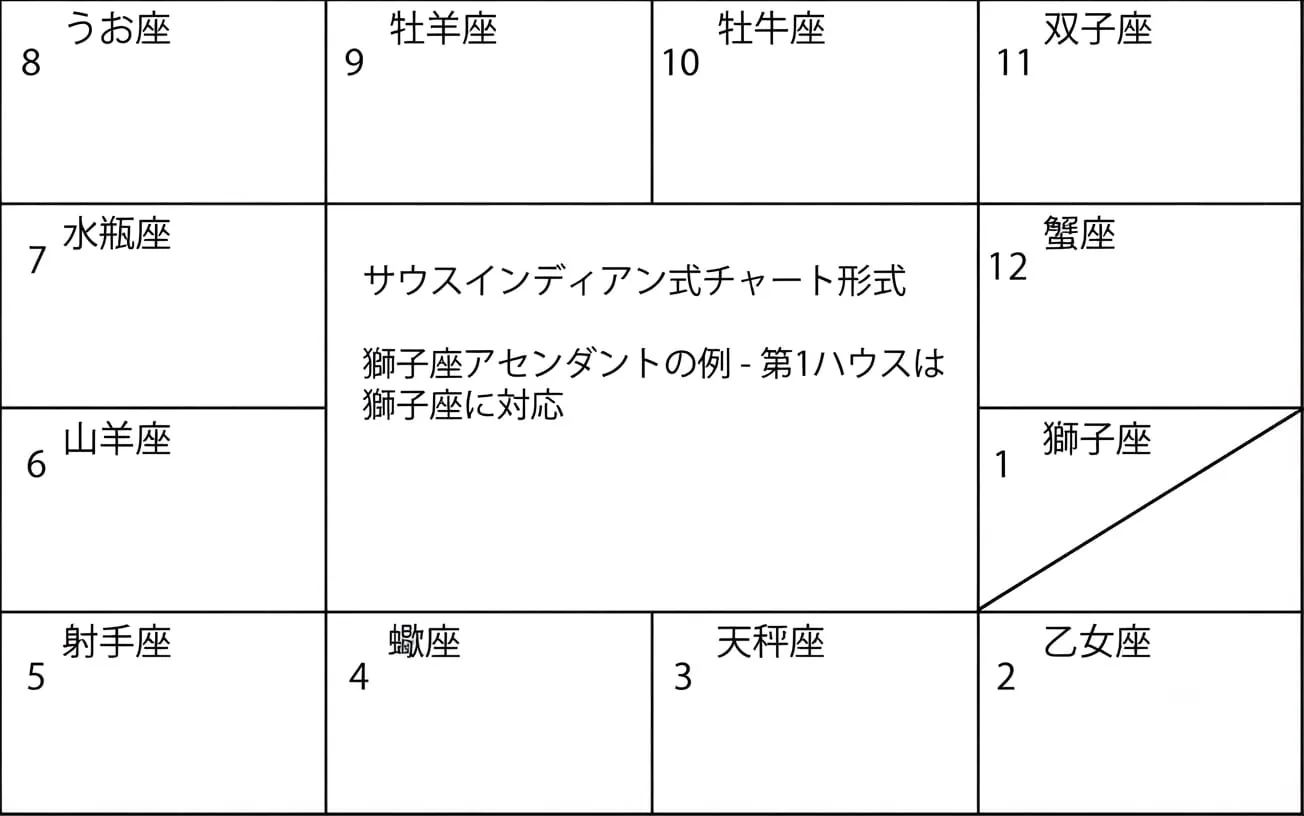
The South Indian chart format, which is often the easiest for beginners to learn, counts houses clockwise from the sign containing the Ascendant. In the example chart above, the Ascendant is marked by the diagonal line in Leo.
The zodiac signs always remain in fixed positions within the chart. For example, Pisces will always appear in the upper-left corner.
The meanings assigned to houses in Jyotish are not always identical to those used in Western Astrology.
Errors in recorded birth times can sometimes create significant difficulties, especially when the Ascendant lies close to the boundary between two signs. However, there are methods available to overcome this problem.[2]
‘Good’ and ‘Bad’ Houses
The ruling planet of a particular house changes according to the Ascendant.
For example, the Moon becomes the ruler of the 1st house for a Cancer Ascendant, while the Sun rules the 1st house for a Leo Ascendant (see the article on planetary rulership of signs).
Regardless of which zodiac sign is associated with a house, favourable houses strengthen planets placed within them, whereas unfavourable houses tend to weaken them.
Trikona or Trinal Houses
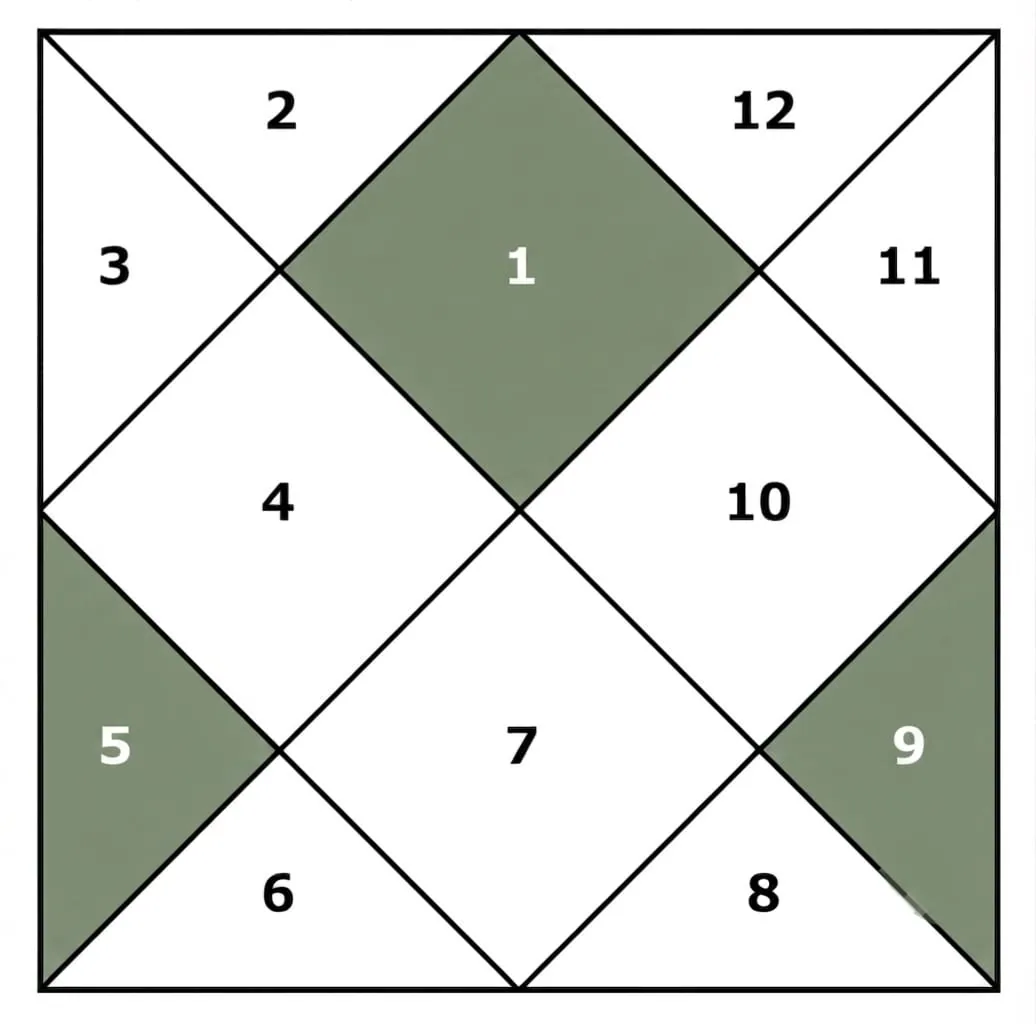
According to Jyotish, the 5th and 9th houses—known as the Trinal or Trikona houses—are extremely auspicious. Planets placed in these houses generally perform well and gain additional strength.
Many astrologers also regard the 1st house as a Trikona house.
As a result, the natural positive qualities of planets occupying the 5th or 9th house become enhanced, allowing them to deliver their beneficial results more fully.
Any houses governed by those planets also receive significant support and strengthening.
The rulers of the 5th and 9th houses carry a naturally positive energy. They bring this favourable influence into whichever house they occupy.
Likewise, they benefit planets they are conjunct with and those they aspect.
Kendras or Angular Houses
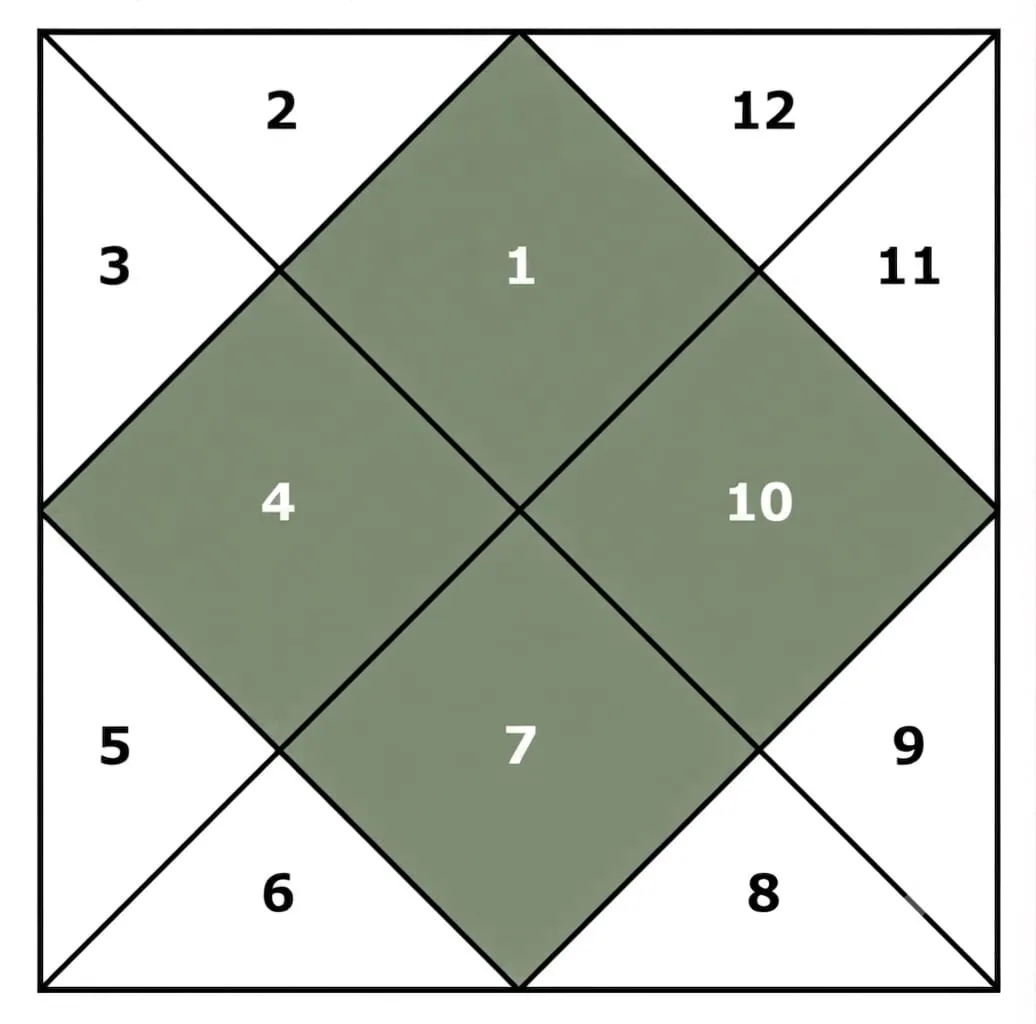
The Kendras, or Angular Houses—namely the 1st, 4th, 7th, and 10th houses—are also considered favourable houses. Planets positioned within them gain strength, and the houses themselves represent generally beneficial areas of life.
A good house has two important effects. First, it strengthens planets placed within it and the matters associated with those planets. Second, its ruler carries a positive influence that benefits the house where it is placed.
Dusthanas or Negative Houses
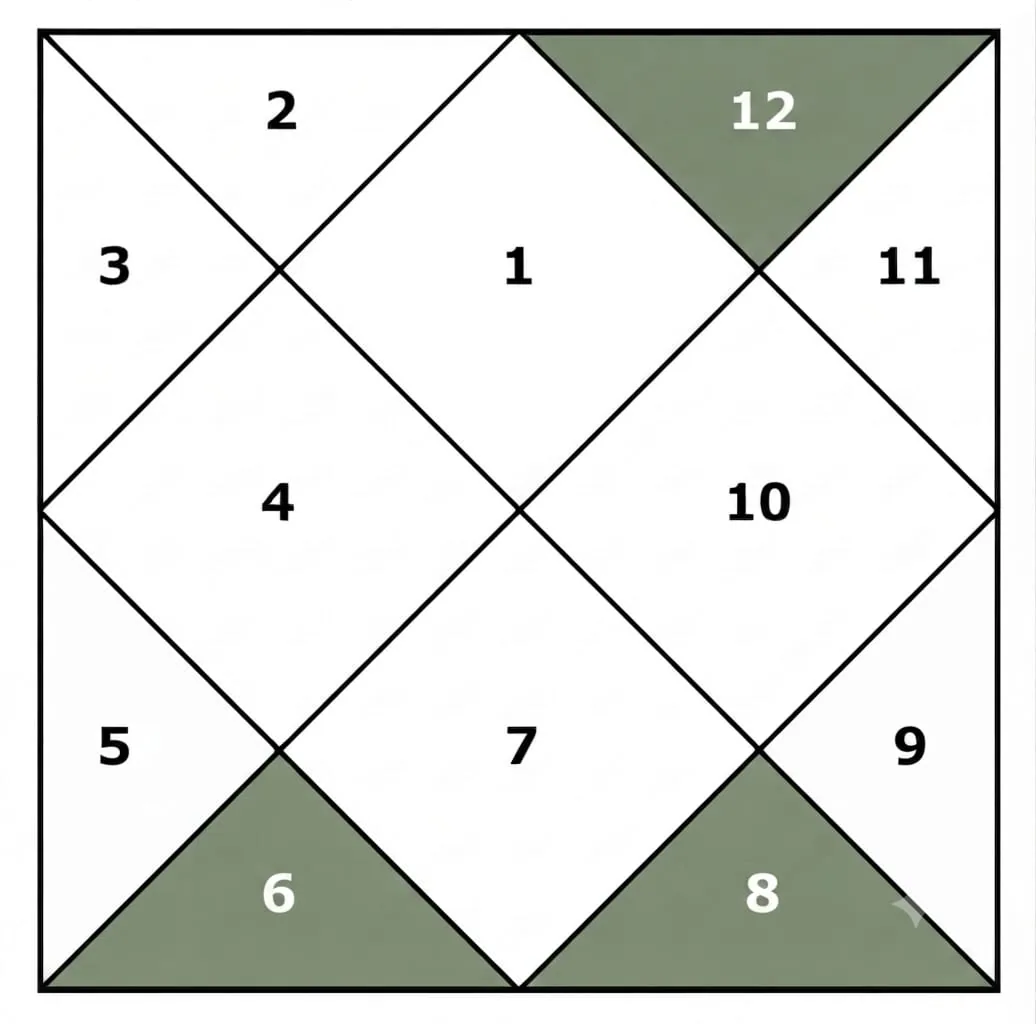
The 6th, 8th, and 12th houses, known as Dusthanas, are regarded as negative houses.
These houses do not represent anything inherently evil. They are classified as negative because they tend to weaken planets occupying them, reducing the ability of those planets to express their natural positive qualities.
Furthermore, the houses ruled by planets placed in the 6th, 8th, or 12th are also weakened, causing difficulties in the affairs associated with those houses.
The rulers of the 6th, 8th, and 12th houses are likewise considered to carry a challenging energy. This influence can disturb the house they occupy, the planets they conjoin, and the houses or planets they aspect.
Among the three Dusthanas, the 8th house is generally regarded as the most difficult.
Even though these houses are considered negative, it is important to understand their deeper meaning. A strong 6th house helps us overcome enemies and competitors. A strong 8th house can indicate longevity and vitality. A strong 12th house suggests limited losses and expenditures, while also supporting spiritual growth and progress toward enlightenment.
Upachaya or Growing Houses
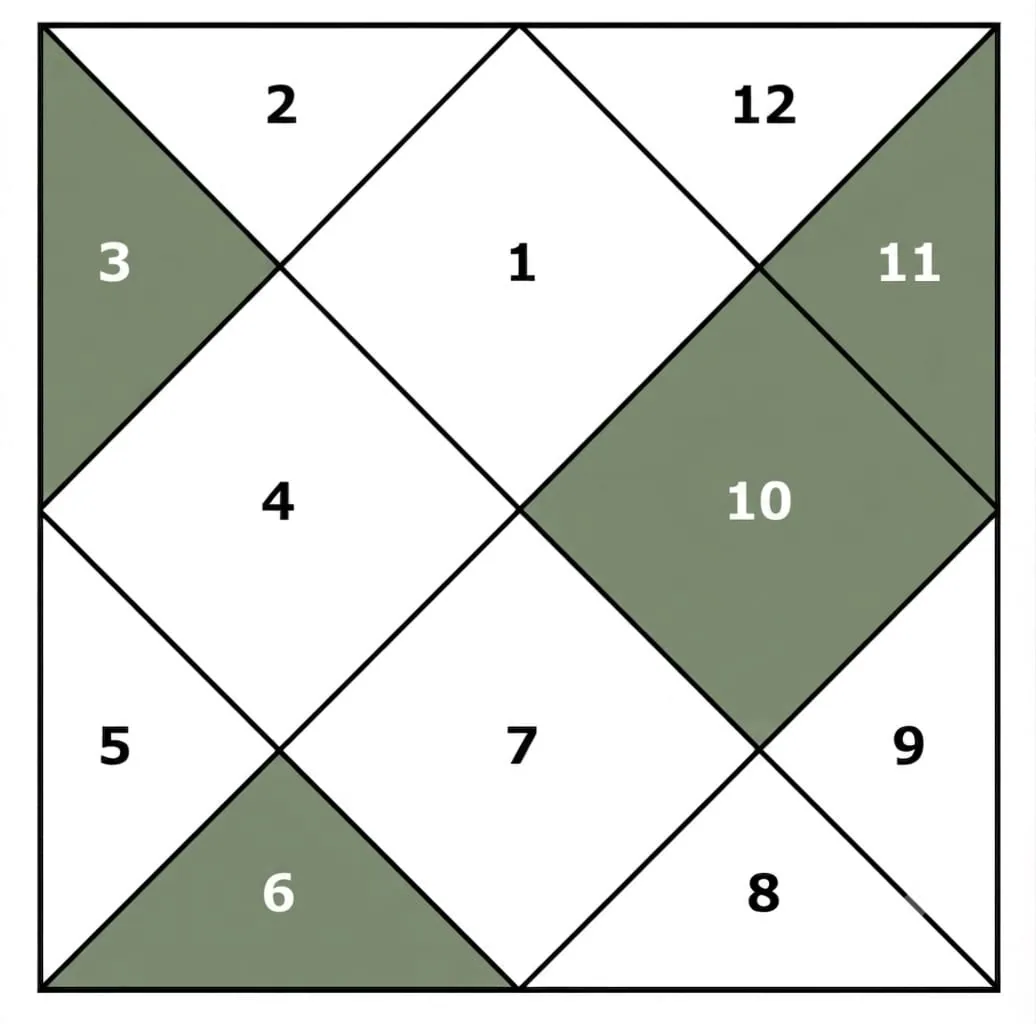
The 3rd, 6th, 10th, and 11th houses are classified as Upachaya houses, often translated as "growing houses."
Any difficulties indicated by these houses tend to improve with time, and malefic planets placed within them frequently produce beneficial results as life progresses.
For this reason, malefic planets are often considered well placed when occupying either their Own Signs, Exalted Signs, or Upachaya houses.
Footnotes
[1] The Ascendant is the zodiac sign that appears to be rising on the eastern horizon at the moment of birth. For example, if the eastern horizon was at 20 degrees Capricorn at the time of birth, the individual would be said to have a Capricorn Ascendant. The Ascendant is marked on the chart by a diagonal line. Note that this refers to the Sidereal Zodiac used in Jyotish, rather than the Tropical Zodiac used in Western Astrology.
[2] Highly skilled and experienced Vedic Astrologers can often work backwards from important life events to determine a person's correct birth time. This process is known as birth-time rectification.
← Houses (Bhavas)