Vedic Wisdom
Planetary Aspects
Planetary Aspects
Summary: Explaining the concept of Planetary Aspects in Jyotish and examining the rules required to apply these principles. Also highlighting the major differences between aspects in Vedic Astrology and Western Astrology.
Planetary aspects are an important part of chart interpretation, and the rules used in Jyotish differ significantly from those employed in Western Astrology.
Planets occupying a house project their field of influence across the birth chart and affect, either positively or negatively, other houses and any planets positioned within them. This influence is known as an aspect.
In Jyotish, aspects are directed from one house to another house (unlike Western Astrology).
Aspects are therefore not based upon one planet's "orb of influence" (for example, a 10-degree sector) interacting with another planet's orb of influence.
Consequently, a planetary aspect can affect a house even when that house contains no planets. This is a very important distinction.
Both occupied and empty houses can receive planetary influences through aspects cast from elsewhere in the birth chart.
Aspects occur from planets located anywhere within one house (for example, the Sun at 2 degrees in the 1st house) and can influence planets located anywhere within the aspected house (for example, Saturn at 29 degrees in the 7th house).
A Simple Example of an Aspect
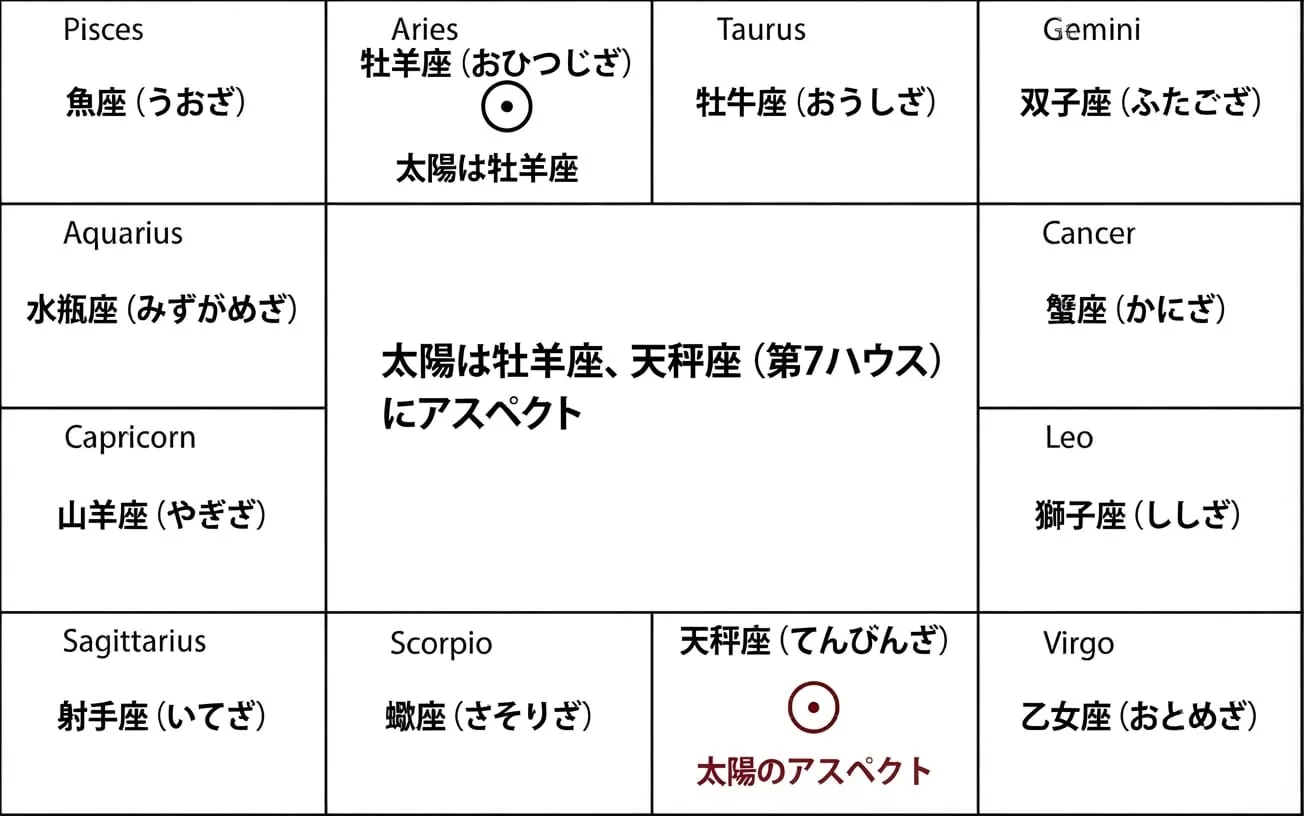
In the example diagram, the Sun projects its field of influence onto the 7th house counted clockwise from its position. In this particular chart, that house corresponds with the sign of Libra.
What effect does this have? The answer depends upon several interconnected factors involved in chart interpretation.
The first step is to determine the Ascendant. This establishes whether the Sun functions as a benefic or malefic influence within the chart. We must then examine the house occupied by the Sun in order to assess its strength and condition. Once this is done, we can identify which house corresponds with Libra.
Suppose the chart has a Sagittarius Ascendant. In that case, the Sun becomes the ruler of the auspicious 9th house (Leo in this chart) and is placed in its sign of exaltation, Aries. The Sun would then cast a highly positive influence through its aspect into Libra. Since Libra corresponds with the 11th house in this example, we would expect the affairs of the 11th house to be strengthened and enhanced.
As a result, matters relating to gains, profits, opportunities, and the fulfilment of desires would likely benefit from this aspect.
Aspect Principle in Jyotish Astrology
Sun Aspects Only the 7th House
Aspect Rules
Rahu and Ketu do not cast any aspects, but all the other planets do.
All planets aspect the 7th house from their position.
Mars additionally aspects the 4th and 8th houses from itself.
Saturn additionally aspects the 3rd and 10th houses from itself.
Jupiter additionally aspects the 5th and 9th houses from itself.
When interpreting planetary aspects, both the natural characteristics and the functional characteristics of the aspecting planet must be taken into consideration.
Aspect Diagram for Mars
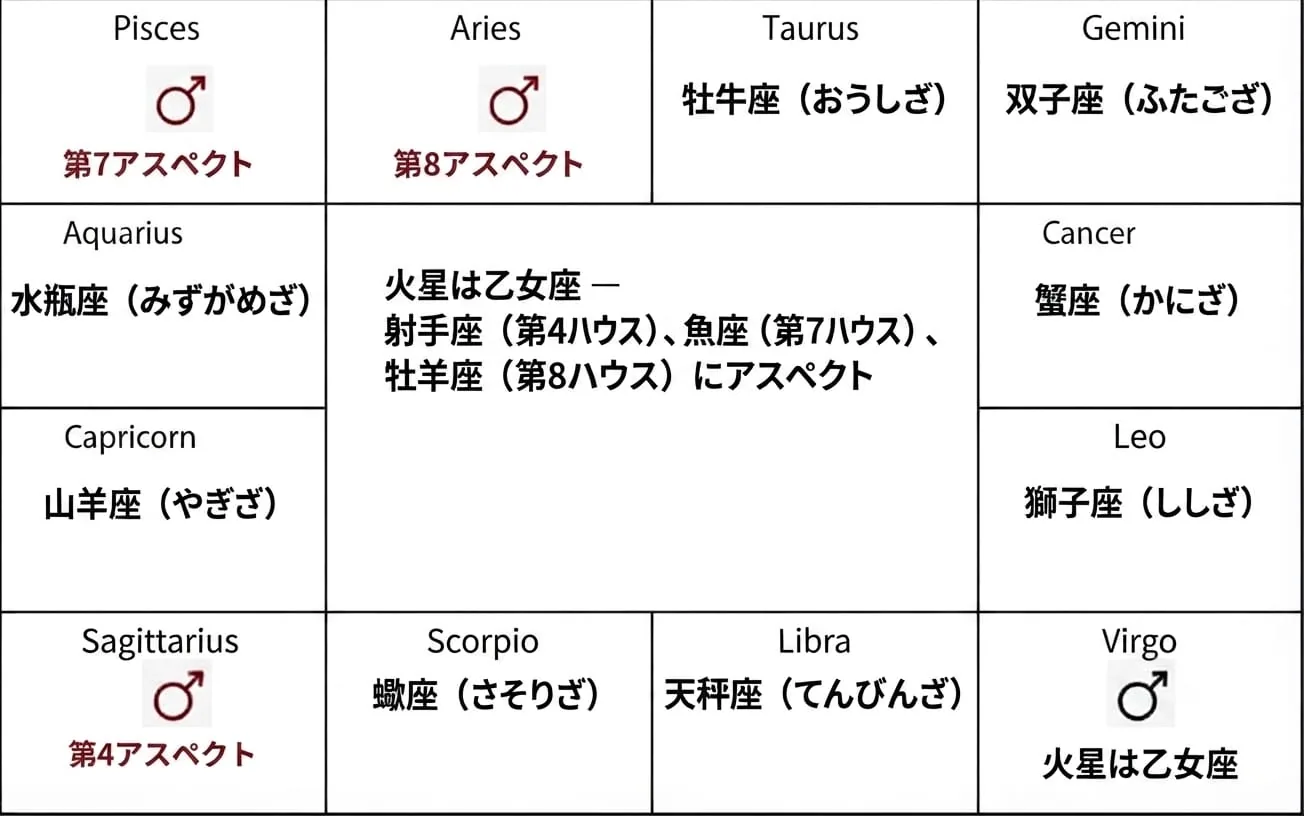
Mars Aspects the 4th, 7th and 8th Houses in Jyotish
Mars casts aspects onto the 4th, 7th, and 8th houses counted from its own position in the birth chart.
Aspect Diagram for Jupiter
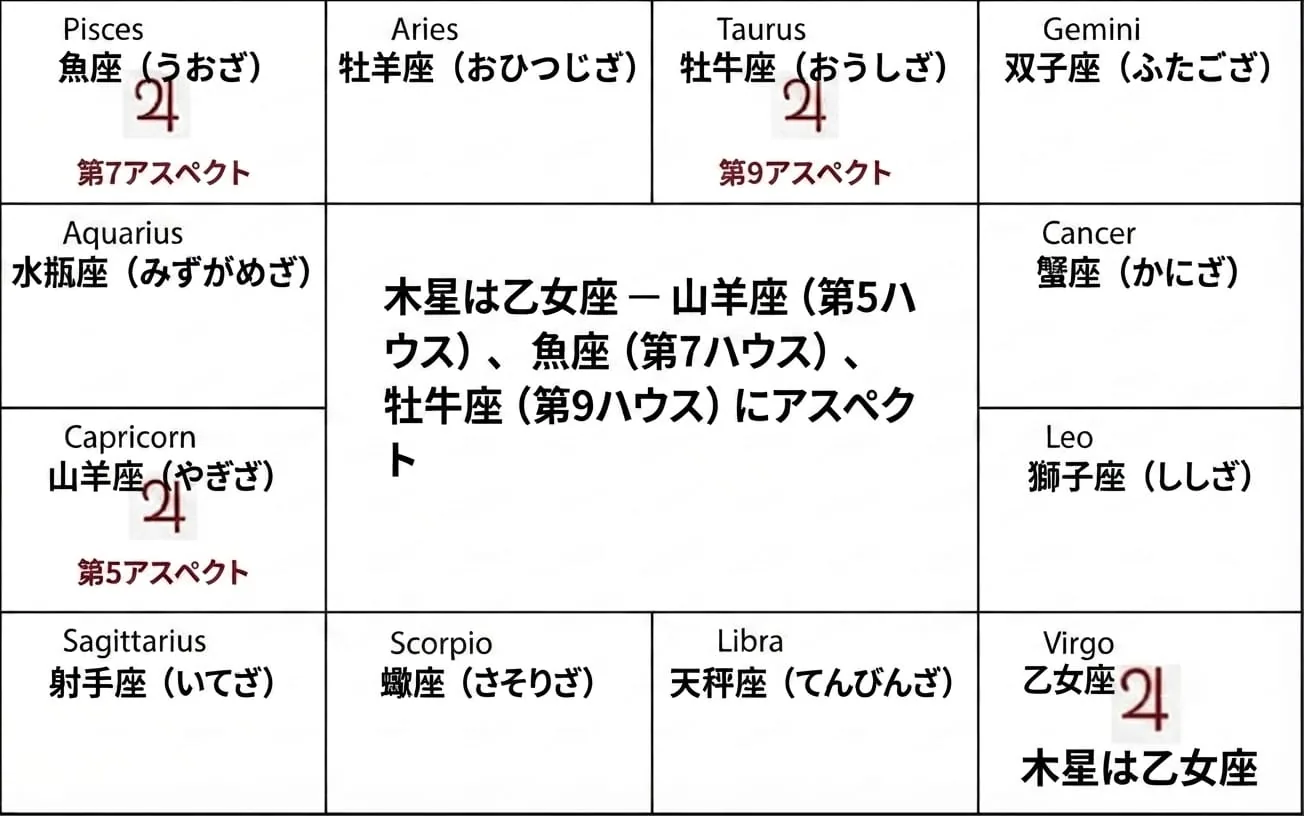
Jupiter Aspects the 5th, 7th and 9th Houses in Jyotish
Jupiter casts aspects onto the 5th, 7th, and 9th houses counted from itself.
Aspect Diagram for Saturn
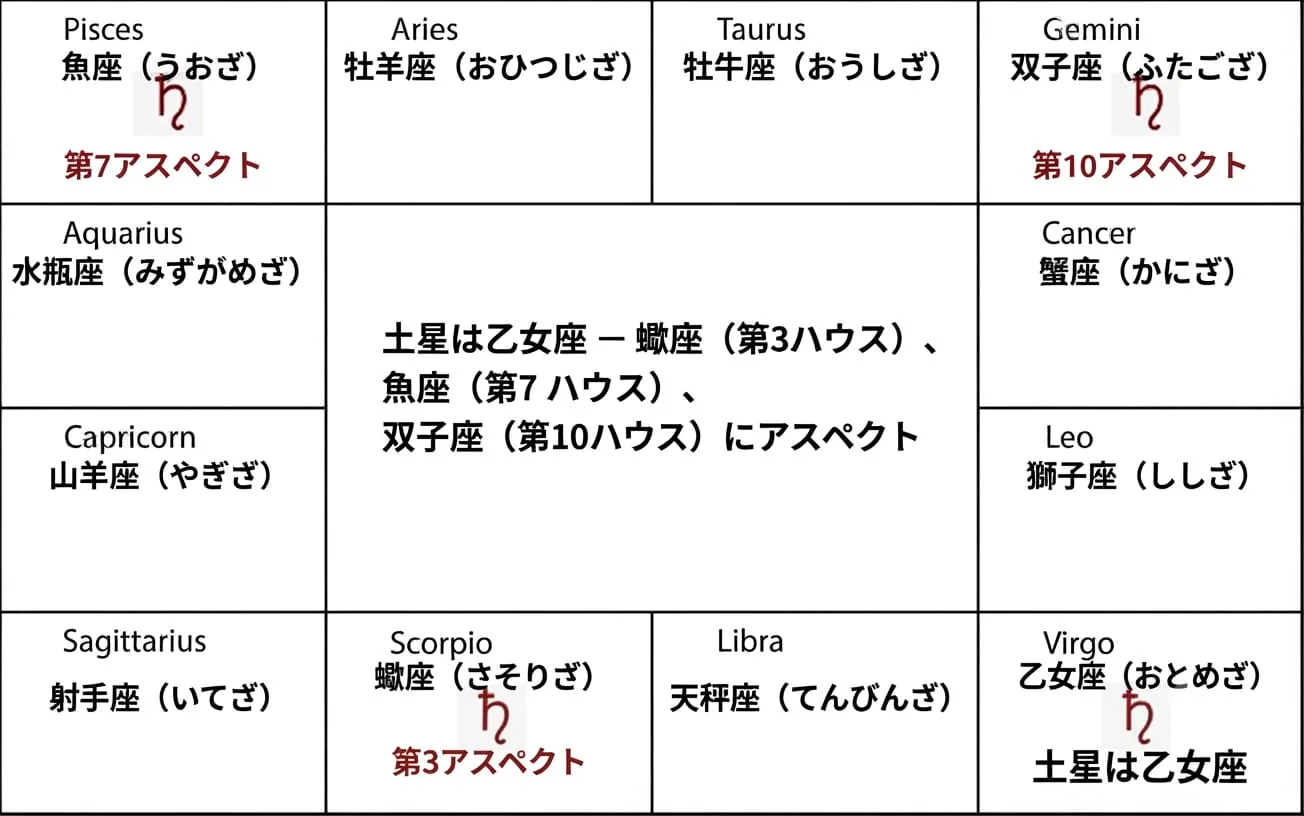
Saturn Aspects the 3rd, 7th and 10th Houses in Jyotish
Saturn casts aspects onto the 3rd, 7th, and 10th houses counted from its own position.
Conjunction and Combustion
In Vedic Astrology, the term conjunction is used when two or more planets occupy the same sign or house, even if they are located near opposite ends of that house.
For example, if the Sun is positioned at 1 degree Taurus and Saturn at 28 degrees Taurus, they would still be considered conjunct in Jyotish.
Unlike Western Astrology, Jyotish does not place the same emphasis on distinctions such as oppositions, trines, sextiles, and similar aspect patterns.
When planets move too close to the Sun, they become weakened and are said to be combust. The exact distance required for combustion varies according to the planet involved.
As a general guideline, if a planet lies within 10 degrees of the Sun, the possibility of combustion should be considered and the exact combustion limits for that particular planet researched.
Combustion can create a variety of difficulties, including weakening the planet itself, reducing the strength of its natural significations, and negatively affecting the houses it rules.
The principle of combustion does not apply to Rahu or Ketu.
← Aspects (Drishti)